
Online Therapy for Adults in Illinois, Washington, Michigan, and Indiana
EMDR Therapy for Trauma
Being stuck in the past is keeping you from moving forward.
What is EMDR Therapy?
EMDR Therapy (Eye Movement Desensitization and Reprocessing) is an evidence-based approach designed to help people process and recover from trauma. It can also be helpful for anxiety, grief, and other forms of emotional distress.
When you go through a traumatic or highly stressful experience, your brain may not fully process what happened. Instead, the memory can feel “stuck”—along with the emotions, thoughts, and physical sensations connected to it.
This is why something in the present can trigger a reaction that feels much bigger than the situation itself.
How EMDR Therapy Works
EMDR therapy works by helping your brain process these experiences in a way that allows them to feel more like something that happened in the past—rather than something you’re still reacting to in the present.
Through a structured process, EMDR engages the left and right sides of the brain, supporting your brain’s natural ability to heal and process information.
Over time, this can reduce the emotional intensity connected to certain memories, so they feel more manageable and less disruptive in your day-to-day life.
If traditional talk therapy hasn’t felt effective, EMDR offers a different approach—one that doesn’t require you to talk through every detail of your experience to begin healing.
EMDR can be especially helpful for people who feel stuck in patterns of overthinking, high anxiety, or emotional overwhelm—even when they understand things logically.
How EMDR Therapy Can Support You
Process trauma and distressing experiences
Reduce anxiety and overthinking
Shift negative self-beliefs and patterns
Feel less reactive to triggers
Improve sleep and your ability to settle your mind
Feel more present, grounded, and connected to yourself
What to Expect in EMDR Therapy
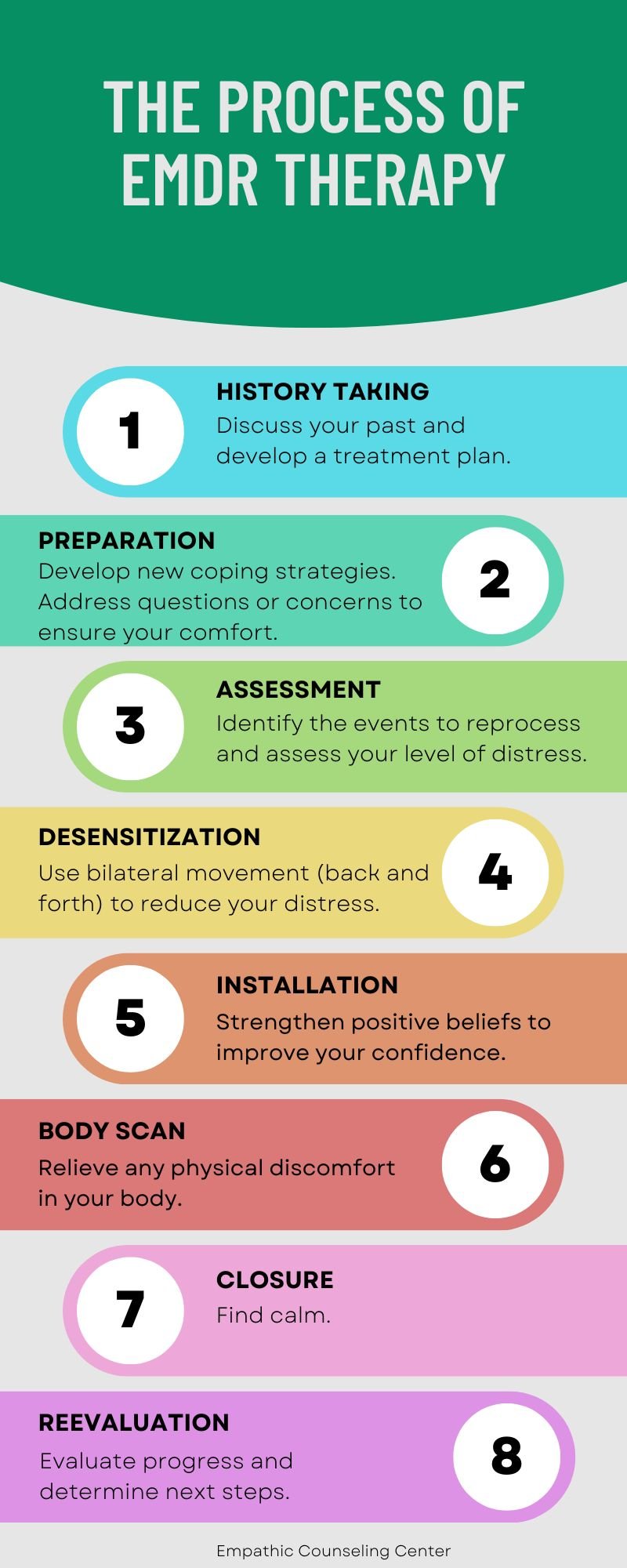
EMDR begins with a foundation of safety and preparation.
In the early stages, we’ll focus on understanding your history, identifying what you’d like to work on, and answering any questions you have. You’ll never be asked to share more than you feel ready for.
We’ll also work on building coping strategies and grounding skills (also known as resourcing), so you feel more supported and in control throughout the process. From there, we move at a pace that feels manageable—gradually processing experiences in a way that helps your system integrate them more fully.
Many people wonder whether EMDR can be effective online—and it can. Research shows that virtual EMDR can be just as effective as in-person sessions.
In my work, I’ve seen many clients experience meaningful progress through online EMDR. There are also a variety of tools we can use to support the process and make sure it feels effective and manageable for you.
Can EMDR Therapy Help Anxiety Too?
Yes. While EMDR is widely known for treating trauma, it can also be very effective for anxiety.
Anxiety is often connected to patterns of negative self-beliefs and past experiences that continue to influence how you respond in the present.
EMDR helps address these patterns, allowing you to relate to yourself and your experiences in a different, more flexible way.
How do I Know if EMDR Therapy is Right for Me?
A big part of my approach is placing a strong emphasis on the Preparation phase.
During this stage, we focus on building coping skills—also known as resourcing—using bilateral stimulation. This helps you feel more grounded, supported, and better able to manage distress that may arise during later phases.
This phase also gives us valuable information about how your system responds to EMDR. It often becomes clear whether this approach feels like a good fit for you before moving into deeper processing work.
Online EMDR Therapy in Illinois, Washington, Indiana, and Michigan
EMDR therapy is offered virtually, allowing you to engage in this work from a space that feels comfortable and familiar.
I provide online EMDR therapy to clients across Illinois, Washington, Indiana, and Michigan.
If you’ve been feeling stuck in patterns that don’t seem to shift—despite understanding them—EMDR may offer a different way forward. Reach out if you’re curious about whether EMDR might be a good fit for you.
“Because EMDR doesn’t require people to speak about the intolerable or explain to a therapist why they feel so upset, it allows them to stay fully focused on their internal experiences, with extraordinary results.”
— Bessel van der Kolk